CONTAINERS – NEW & USED
Understanding Shipping Containers and Their Core Types
Shipping containers form the backbone of global trade, carrying over 90% of non-bulk cargo worldwide. Standardized under International Organization for Standardization (ISO) specifications, these heavy-duty steel structures allow goods to transfer seamlessly across ships, trains, and trucks without intermediate offloading. Beyond international freight logistics, their durability, security, and modular structure have made them increasingly popular for on-site industrial storage and custom architecture.
Primary Types of Shipping Containers
While all standard containers share uniform corner castings and lock mechanisms, their designs vary significantly depending on the nature of the cargo:
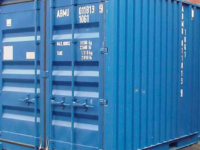
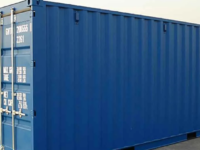
1. Dry Storage Containers (General Purpose)
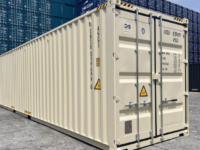
The most common container type in service today, accounting for roughly 90% of the global fleet. These fully enclosed, weather-proof steel boxes feature double cargo doors at one end. They are typically available in two main configurations:
Standard Dry Vans: Available in standard length dimensions of 20ft and 40ft, both standing at a standard height of 8.5 ft.
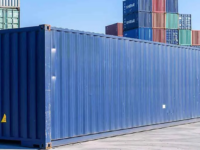
High Cube (HC) Containers: Identical to standard dry vans but with an extra foot of vertical clearance (standing 9.5 ft tall), making them ideal for voluminous or light-density freight.
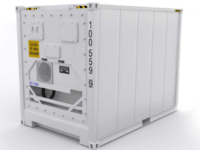
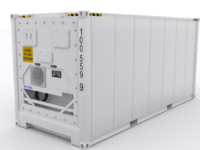
2. Refrigerated Containers (Reefers)
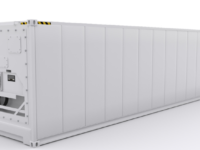
Equipped with built-in, temperature-controlled refrigeration units, Reefers maintain precise temperatures ranging from -30°C to +30°C. They require an external power source—either from a vessel’s power grid, a port terminal connection, or a diesel generator set (genset) while in transit. Reefers transport temperature-sensitive items such as pharmaceuticals, fresh produce, meat, and dairy products.
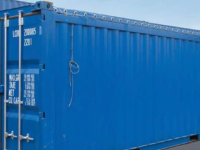
3. Open Top Containers
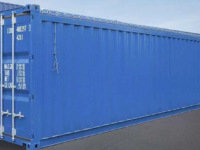
Instead of a solid steel roof, Open Top units utilize removable tarpaulins or soft tops supported by roof bows. They are specifically designed for over-height cargo or heavy machinery that cannot be easily loaded through end doors and must be lowered from above using cranes.
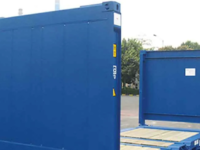
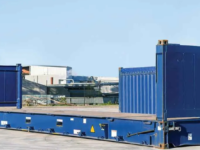
4. Flat Rack Containers
Featuring flat wooden or steel flooring alongside collapsible end walls, Flat Racks lack side walls and roofs entirely. They accommodate heavy, out-of-gauge (OOG) freight—such as construction equipment, pipes, boats, or industrial machinery—that exceeds standard width and height dimensions.
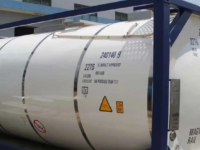
5. ISO Tank Containers (Tanktainers)
Designed explicitly for bulk liquids, gases, and powders, an ISO Tank consists of a heavy stainless-steel pressure vessel suspended inside a standard 20ft steel framing structure. They safely transport hazardous materials, chemicals, fuel, and food-grade liquids (such as oils and juices).
6. Double Door & Side Door Containers
Double Door (Tunnel Containers): Feature cargo doors at both ends, allowing faster loading, unloading, and easy stock sorting.
Open Side Containers: Possess full-opening side doors, giving complete side access to load lengthy goods that cannot fit through standard end doors.
Whether selecting containers for ocean freight, secure site storage, or commercial modification, understanding these standard dimensions and structural configurations ensures optimal safety and logistics efficiency.